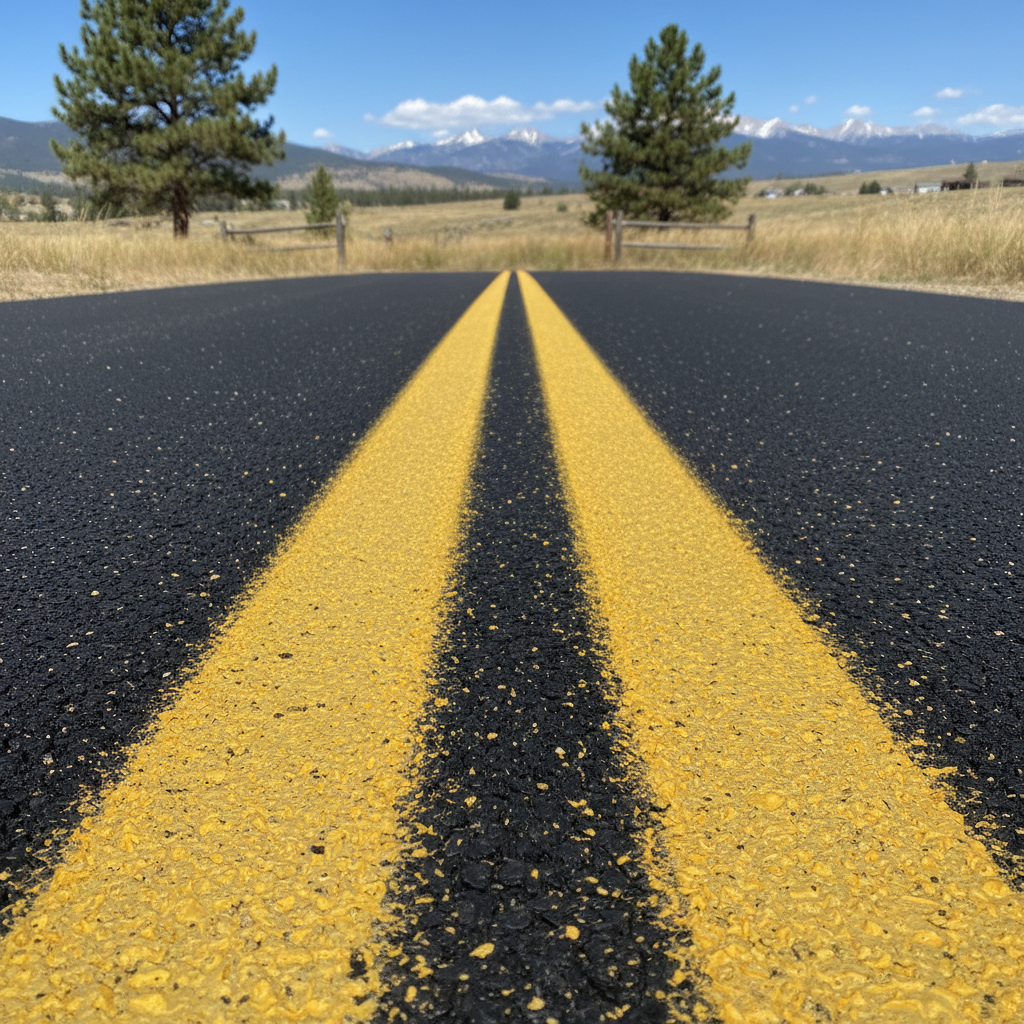
So, you've got an asphalt driveway or a small parking pad, and maybe those lines are starting to fade. You're probably thinking, "Can I just stripe this myself?" That's a fair question, and the answer, like most things in life, isn't a simple yes or no. For some small, straightforward jobs, you absolutely can tackle it. For others? You're honestly better off letting folks like us at Top Line Asphalt Missoula handle it.
Before You Even Think About Paint
First things first: really look at your asphalt. Is it in decent shape? If your driveway is full of cracks, potholes, or looks like alligator skin all over, striping it is kind of like putting lipstick on a pig, isn't it? You've got to fix those repairs first. Painting over a crumbling surface? That's just a waste of your time and money because the paint won't stick right, and it'll just flake off with the damaged asphalt.
Next, think about how big and complicated the job is. Are we talking about one or two parking spots, maybe an outline for a basketball court? That's one thing. But are you trying to stripe a multi-car parking lot with specific traffic flow arrows, handicapped spots, and fire lanes? That's a completely different ballgame. Precision really matters here, especially for things like ADA compliance. If you're just marking off where your kids can park their bikes, though, you've got a lot more wiggle room.
And don't forget the weather. Here in Missoula, we get some pretty wild temperature swings, as you know. You definitely don't want to be striping when it's too cold, too hot, or when rain is coming. The asphalt needs to be dry, and the air temperature should ideally be somewhere between 50 and 80 degrees Fahrenheit for the paint to cure correctly. Trying to stripe in early spring when we still get those surprise snow showers, or late fall when the temps drop fast at night? You're just asking for trouble there.
What You Can DIY (Realistically)
If your project is small and simple, here's what you'll need and how you can go about it:
- Cleaning Supplies: Grab a good power washer or a stiff broom. Maybe some degreaser too, if you've got oil stains. The surface absolutely has to be clean and free of dirt, debris, and loose gravel.
- Measuring Tape and Chalk Line: Accuracy is key, even for little jobs. Measure twice, paint once – that old saying really holds true.
- Stencils: If you need specific symbols like arrows or numbers, you can buy or rent stencils.
- Striping Paint: Just make sure it's actually made for asphalt and outdoor use. Don't just grab any old house paint, seriously.
- Applicator: For tiny jobs, you might get away with a roller and masking tape for straight lines. But for anything more than a few feet, a walk-behind striping machine (you can rent these) will give you much cleaner, more consistent lines.
The process itself involves cleaning, measuring, chalking out your lines, taping off edges if you're using a roller, and then putting down the paint. Take your time, go slow and steady. Two thin coats are always better than one thick, gloppy mess. Let that first coat dry completely before you apply the second. And remember to block off the area until the paint is fully cured – you really don't want tire marks ruining all your hard work, do you?
When to Call a Pro
Look, I'm all for saving a buck when you can, but some jobs just aren't meant for a weekend warrior. Here's when you should probably pick up the phone and call someone like us:
- Large Areas: If you're talking about a commercial parking lot, an apartment complex, or even a really big residential driveway with lots of turns and parking spaces, that's definitely pro territory. We've got the right equipment – industrial-grade striping machines, specialized paints, and trained crews – to get it done efficiently and correctly.
- Complex Layouts: Do you need specific traffic flow, directional arrows, fire lanes, or ADA-compliant handicapped parking spots? These things demand precise measurements, adherence to local codes, and specialized stencils. Messing up an ADA spot can actually lead to fines. It's not just about painting a blue square, you know.
- Time Constraints: If you need the job done quickly and with minimal disruption, a professional crew can get in and out way faster than you can.
- Quality and Durability: Professional-grade paints and application techniques simply last longer. We know what works best for our climate, dealing with everything from our hot summers to those brutal Missoula winters. The paint we use isn't the same stuff you'll find at the big box store.
- Existing Damage: As I mentioned before, if your asphalt needs significant repairs, we can handle that before striping. It's often more cost-effective to have one company manage the whole process from start to finish.
Ultimately, it really comes down to what you're comfortable doing and the results you're hoping for. For a simple, small job, sure, give it a shot. But for anything that needs precision, durability, or covers a larger area, save yourself the headache and the potential for a shoddy-looking job. Give Top Line Asphalt Missoula a call, and we can get your lines looking sharp and lasting for years.