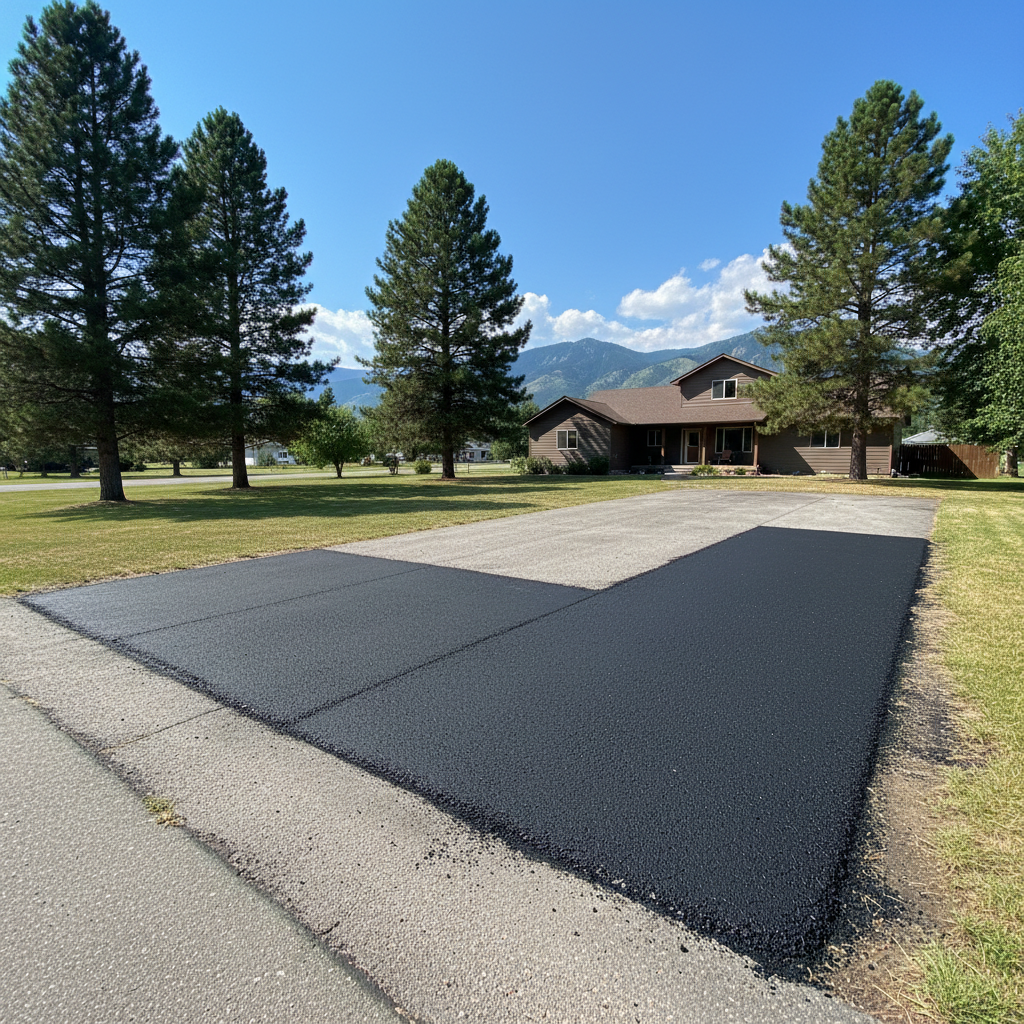
Missoula Asphalt Patching Costs: What You'll Actually Pay
Got a pothole that's getting bigger every winter? Or maybe some cracks are turning into spiderwebs across your parking lot or driveway? You're probably wondering what it'll cost to get that fixed right. I totally get it. Nobody wants a surprise bill, especially for something as important as your asphalt.
As a local contractor right here in Missoula, I've seen my share of patching jobs, both big and small. And while I can't give you an exact number without actually looking at the job, I can definitely give you a solid idea of what makes the price go up or down, and what you should expect to pay for quality work. Let's dig in.
What Makes Asphalt Patching More (or Less) Expensive?
There's no single price for asphalt patching. A few key things really drive the cost:
- The Size and Depth of the Damage: This is probably the most obvious one, isn't it? A small, shallow pothole will be cheaper to fix than a huge, deep section that's just crumbling away. We measure by square footage, but how deep it goes matters too. A patch that's only an inch or two deep is less work and uses less material than one that needs to go down four or five inches.
- Type of Patching Method: There are a few ways to patch asphalt, and some are more involved — and therefore more expensive — than others.
- Accessibility: Can we easily get our equipment to the damaged area? If it's in a tight spot, like a narrow alley behind some shops downtown or a tricky corner of a residential driveway in the Rattlesnake, it takes more time and specialized equipment. That adds to the cost.
- Material Costs: Asphalt prices change, just like gas prices do. We're also talking about the cost of aggregate, binders, and other materials.
- Prep Work Required: Sometimes, the area around the damage needs extra work. Maybe poor drainage is causing the problem, or the sub-base is messed up. Fixing these underlying issues adds to the cost, but it's really important for a repair that lasts.
- Time of Year: Believe it or not, patching in the dead of winter when the ground is frozen solid can be tougher and sometimes more expensive. That's because of how we have to handle materials and equipment limitations. Spring and fall are usually perfect.
Common Patching Methods and Their Price Tags
When you're talking about patching, you're usually looking at a few main techniques:
- Skin Patching (Surface Patch): This is the cheapest and quickest option. We clean the area and just put a layer of new asphalt over the damaged spot. It's really just a temporary fix for very shallow cracks or depressions. Think of it like a band-aid. You might pay anywhere from $3-$6 per square foot for this, but honestly, it won't last long, especially with our Missoula freeze-thaw cycles. I generally don't recommend this for anything more than a very short-term solution.
- Saw-Cut (Remove and Replace): This is the gold standard for repairs that actually last. We saw-cut around the damaged area, pull out the old asphalt and often some of the base material, get the sub-base ready, and then lay down new hot-mix asphalt. This gives you a much stronger, more durable repair. For this type of work, you're typically looking at $8-$15 per square foot. This range covers things like depth, whether the base needs repair, and the overall project size. A smaller, deeper patch might be at the higher end per square foot because of mobilization costs.
- Infrared Patching: This method uses infrared technology to heat the existing asphalt. That lets us rake and blend new asphalt into the old, creating a seamless repair. It's great for smaller, irregular areas and can be very efficient. Costs can be similar to saw-cut, sometimes slightly higher per square foot for very small areas, perhaps $10-$18 per square foot. But, it can be more cost-effective if you have multiple smaller repairs scattered across a larger area.
For a typical residential driveway with a few potholes, you might be looking at a total project cost anywhere from $400 to $1,500+. That depends on how many patches you need, their size, and their depth. For commercial lots with larger areas of damage, costs can easily climb into the thousands.
What Should a Good Quote Include?
When Top Line Asphalt Missoula gives you a quote — or any reputable contractor, for that matter — you should expect it to be detailed. Don't just settle for a handshake and a vague number. A solid quote will clearly outline:
- Scope of Work: Exactly what areas we'll patch, and what method we'll use (e.g.,