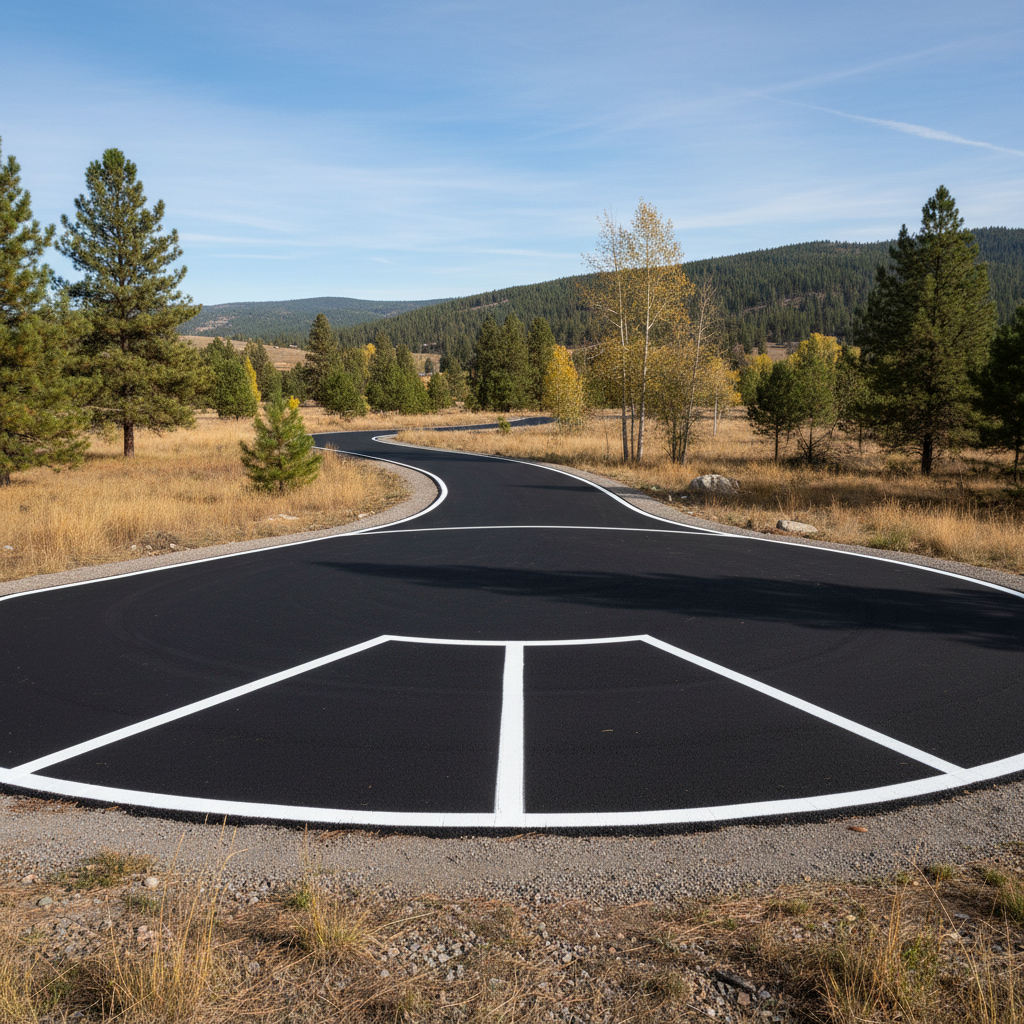
You'd think painting lines on asphalt would be pretty straightforward, wouldn't you? Well, it can be, but I've seen plenty of Missoula homeowners and businesses make some common mistakes when they're planning or hiring for an asphalt striping job. These aren't usually huge, catastrophic errors, but they're the kind that cause headaches, extra costs, or just plain disappointment with the finished product. Let's talk about what to watch out for so you don't end up regretting your choices.
Not Really Thinking About Why You Need Striping
This might sound super basic, but it's probably the most frequent thing people overlook. Folks often just think, "I need lines," without really considering why they need them or what purpose they're supposed to serve. Are you striping a parking lot for a small business, a residential driveway, or maybe a sports court? Each of these has different requirements. A parking lot, for example, needs to follow ADA standards for accessible parking spaces, including van-accessible spots and access aisles. You can't just guess at these dimensions; they're legally mandated. If you're doing a driveway, are you trying to guide traffic, mark off play areas, or just make it look neat? Knowing the purpose dictates the layout, the type of paint, and even the prep work needed.
I've seen small businesses in areas like the Northside, where parking is already tight, try to cram too many spaces into a small lot. They ignore fire lanes or proper turning radii. It looks good on paper, sure, but then delivery trucks can't navigate, or emergency vehicles get blocked. You've got to think about the flow of traffic, pedestrian safety, and accessibility right from the start. Don't just tell your contractor "stripe it"; tell them "I need X number of parking spots, including ADA, and I want to make sure traffic flows well."
Ignoring Surface Prep (or Letting Your Contractor Ignore It)
This is a big one, a really big one. You can use the best paint in the world, but if the surface isn't ready, those lines won't last. I'm talking about dirt, gravel, loose debris, oil spots, or even old, flaking paint. Here in Missoula, we get our fair share of winter grit and spring runoff. If your lot isn't swept clean, pressure washed, and completely dry before painting, you're just painting over grime. That paint won't stick properly, and it'll start peeling or fading way too fast. It's like trying to paint a dirty wall in your house – it just doesn't work, does it?
A good contractor, like us at Top Line Asphalt Missoula, will always stress proper surface preparation. If a quote seems unusually low, sometimes it's because they're cutting corners here. Ask about their prep process. Do they sweep? Do they blow off debris? Do they address oil stains? If they just show up with a paint machine and start spraying, that's a red flag. You'll be re-striping sooner than you think, and that's just throwing money away.
Choosing the Wrong Type of Paint
Believe it or not, not all striping paints are created equal. There are different types for different applications and different climates. You've got water-based, solvent-based, thermoplastic, and even epoxy paints. For most parking lots and driveways, a good quality acrylic water-based paint is common, but it needs to be made for exterior use and traffic. If you're striping a high-traffic area, or a surface that sees a lot of heavy vehicles, you might need something more durable.
Consider Missoula's weather. We get hot summers and freezing winters with plenty of snow and ice. The freeze-thaw cycle can be brutal on asphalt and paint. A cheap, low-grade paint might look fine for a month or two, but it'll crack, fade, and wear away quickly under our conditions. Ask your contractor what type of paint they use and why. A reputable pro will be happy to explain the differences and recommend the best option for your specific project and budget.
Not Getting a Clear Scope of Work and Layout Plan
This goes hand-in-hand with understanding the 'why.' Before any paint touches the ground, you should have a clear understanding of what's going to be striped and where. For a parking lot, this means a detailed layout plan showing parking stalls, arrows, accessible spaces, fire lanes, and any custom stencils. For a driveway, it might be simpler, but still, a clear agreement on what lines go where. Don't just assume the contractor knows what you want.
I've seen jobs where the customer thought they were getting 90-degree parking, and the contractor assumed 60-degree. That led to a lot of wasted paint and rework, believe me. Get it in writing or, even better, have them mark out the layout with chalk or temporary paint before they start the final striping. This gives you a chance to make adjustments and makes sure everyone is on the same page. It prevents those "that's not what I imagined" moments after the paint has dried.
Overlooking Maintenance and Future Needs
Striping isn't a one-and-done deal. It's part of your overall asphalt maintenance, you know? Depending on traffic volume and weather exposure, lines will fade and need refreshing every few years. When you're planning, think about the long game. Is your asphalt in good enough shape to hold new striping? If it's full of cracks or potholes, you might need repairs or even a sealcoat before striping. Painting over a crumbling surface is like putting lipstick on a pig – it won't last, and it won't look good.
Also, consider if your needs might change. Are you planning an expansion soon? Will traffic patterns shift? It's often more cost-effective to address these things now rather than having to re-stripe a perfectly good lot a year or two down the road. A little foresight can save you a lot of hassle and money in the long run.