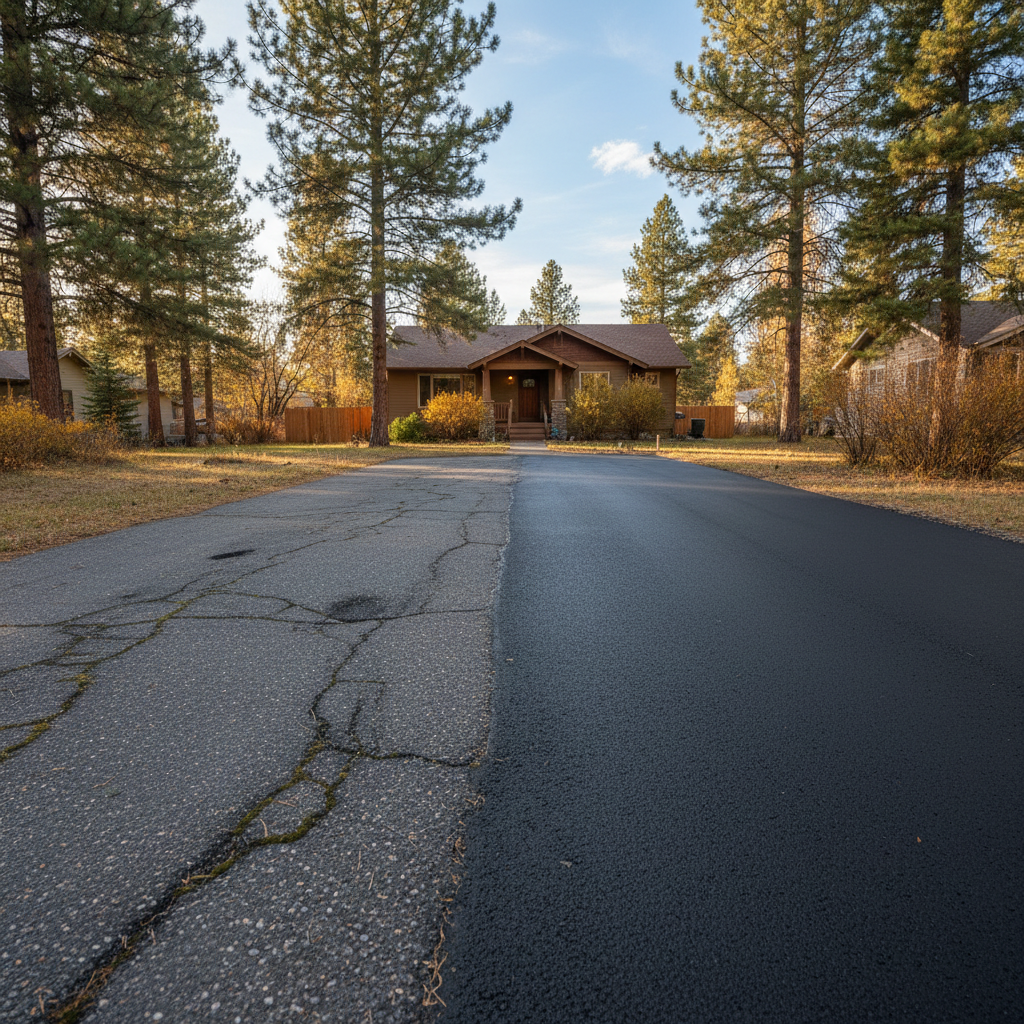
So, you've got an asphalt driveway or parking lot, and you know it needs some TLC to keep it looking good and lasting a long time. You've probably heard folks talk about 'slurry coating' or 'sealcoating,' but it's not always clear what they mean. We usually tackle this with a couple of main methods, and for homeowners, it often boils down to two choices: a real slurry seal or a simpler asphalt emulsion sealcoat. Let's break down each one and figure out which I typically suggest for properties around Missoula.
What's the Big Deal, Anyway?
When most people say 'slurry coating,' they're actually picturing a basic asphalt emulsion sealcoat. And that's a fine product, honestly. It's a liquid asphalt pavement sealer, usually mixed with water, some mineral fillers, and other stuff to help it stick and dry right. It goes on as a thin, protective layer, kind of like painting your driveway, you know?
A true 'slurry seal,' though, is a bit tougher. It's a mix of emulsified asphalt, aggregate (that's small, fine crushed rock), water, and chemical additives. Because it has that aggregate in it, it's a thicker, more substantial application. It's built to fill tiny cracks and gaps, put down a fresh wearing surface, and really stretch out your pavement's life. Think of it less like paint and more like a thin, brand-new layer of asphalt.
Cost: How Much Are We Talking?
This is usually the first thing people ask, and it's a fair question. Generally, an asphalt emulsion sealcoat will cost you less upfront. It's quicker to put down, uses less material per square foot, and doesn't need the specialized equipment or crew a slurry seal does. For your average residential driveway, you're looking at a pretty reasonable price to get that fresh, black look and some basic protection.
A true slurry seal costs more per square foot. There's just more material involved, the aggregate adds to the price, and the whole application process is more complex. It's a bigger investment, no doubt. But remember, we're talking about the initial cost here, not necessarily what you save in the long run.
Durability & Protection: What Holds Up Best in Montana?
This is where things get real, especially with our Missoula weather. An asphalt emulsion sealcoat does a decent job of shielding your pavement from UV rays, water getting in, and oil spills. It gives it a nice, dark finish that even helps absorb heat in winter, which can be a bonus. But it's a thin layer. It will wear down, especially in busy spots or where you're constantly turning your wheels.
A slurry seal is a whole different animal. Because it contains aggregate, it creates a much more durable, wear-resistant surface. It fills in those tiny surface cracks and makes the pavement feel new again. It's way better at handling the freeze-thaw cycles we get here in Missoula—you know, where water sneaks into small cracks, freezes, expands, and then thaws, making those cracks even bigger. The thicker layer and aggregate in a slurry seal offer superior protection against that kind of damage. It's made to take a beating, frankly.
Maintenance & Lifespan: How Often Do You Want to Deal With This?
With a standard asphalt emulsion sealcoat, you're usually planning to reapply it every 2-3 years to keep its protective qualities and good looks. If you skip a year or two, you'll start seeing the pavement underneath break down faster, and those small cracks will really open up.
A properly applied slurry seal, on the other hand, can last 5-7 years, sometimes even longer, depending on traffic and conditions. You get a much longer stretch between applications, which means less hassle and, over time, potentially less expense. You're not just sealing the surface; you're essentially putting a new, thin wearing course right on top of your existing asphalt.
Appearance: Which One Looks Nicer?
Both options will give your asphalt a fresh, dark, uniform look, which is a huge step up from faded, gray pavement. The asphalt emulsion sealcoat usually dries to a very smooth, jet-black finish. It looks clean and sharp.
A slurry seal will also be dark and uniform, but because of the aggregate, it'll have a slightly coarser texture. It's not rough, but it's not perfectly smooth like the emulsion. Some folks prefer the smoother look, while others like the more 'road-like' texture of the slurry seal. It's really a matter of personal taste, but both definitely boost your curb appeal.
My Take for Missoula Homeowners
Alright, so what's the final word from Top Line Asphalt Missoula? For most homeowners right here in Missoula, especially considering our climate—the hot summers, the snowy, icy winters, and that endless freeze-thaw cycle that just loves to chew up pavement—I almost always lean towards a true slurry seal if your budget allows. Especially if your driveway is starting to show its age with a lot of fine cracking or surface raveling, a slurry seal is going to give you a much better return on your investment.
It offers better protection, lasts way longer, and does a better job of fixing minor surface flaws. If you're on a tighter budget or your asphalt is fairly new and just needs basic UV and water protection, a high-quality asphalt emulsion sealcoat is still a solid choice. But if you want to get the most life out of your pavement and not have to think about it as often, a slurry seal is the way to go. We've seen plenty of driveways over in the Rattlesnake or out by Target that really benefit from that extra layer of protection a slurry seal offers. It just holds up better to what Montana throws at it. If you're not sure which is right for your property, give us a call. We'll come take a look and give you an honest recommendation.