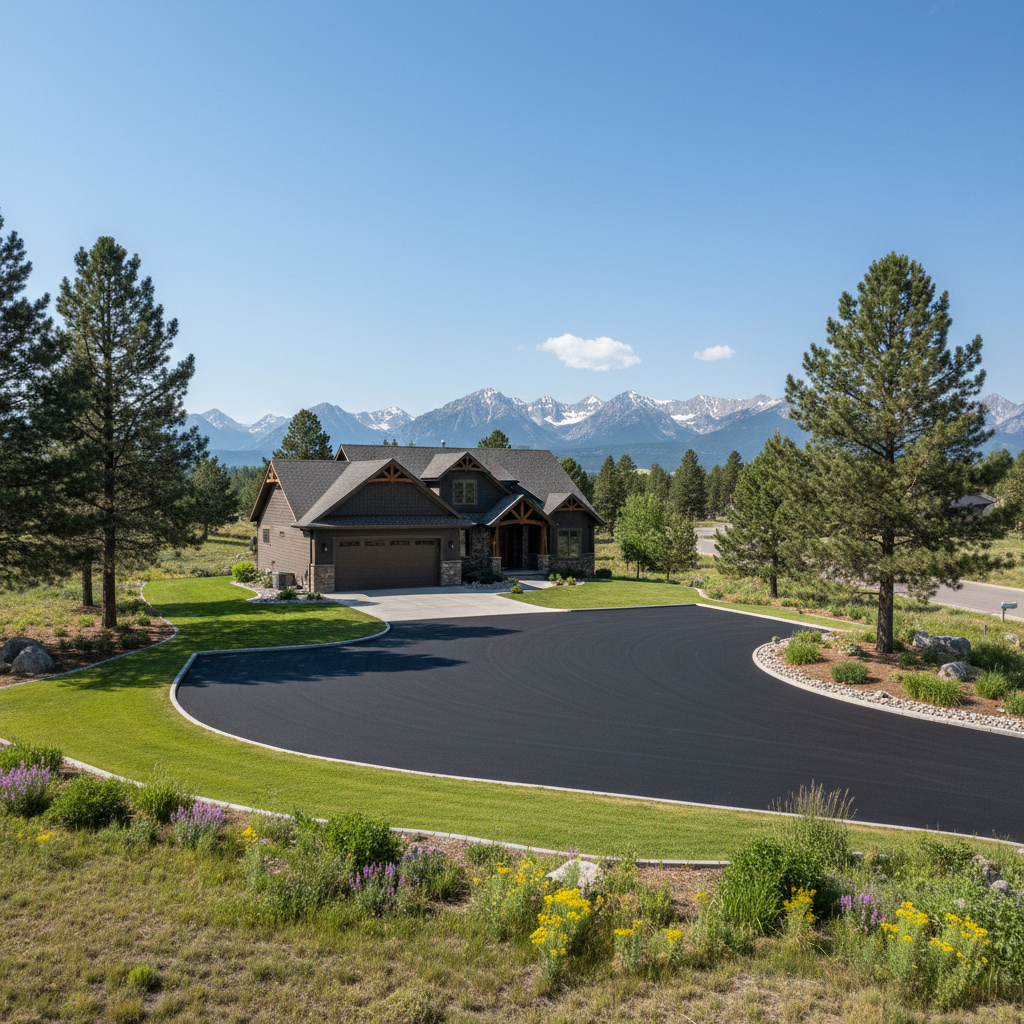
Alright, so you're thinking about getting some asphalt work done on your property here in Missoula. Maybe it's a new driveway, a parking pad, or revamping an old surface. That's a solid investment, and like any big project, a little planning goes a long way to making sure it runs smooth, literally.
Setting Your Project Timeline
Let's talk timing. You can't just snap your fingers and have a new driveway, can you? Asphalt paving is pretty weather-dependent, especially here in Missoula. We've got those cold winters and sometimes wet springs and falls. Generally, the best time for asphalt paving is late spring, summer, and early fall. That's when you get consistent temperatures above 50 degrees Fahrenheit, which is crucial for the asphalt to cure properly. Trying to pave when it's too cold can lead to cracking and premature failure. And nobody wants that.
You'll want to start reaching out to contractors, like us at Top Line Asphalt Missoula, a good 2-3 months before you actually want the work done. The good ones get booked up fast, especially during peak season. If you're looking at a spring project, start making calls in January or February. For a summer job, think April or May. This gives you time to get bids, compare them, ask questions, and get on the schedule without feeling rushed.
Once the work starts, the actual paving itself can be pretty quick for a standard driveway – maybe a day or two for the main paving. But there's prep work involved, and then the curing time. You won't be driving on it immediately, so factor in a few days to a week where you'll need to keep vehicles off the fresh asphalt.
What to Expect During the Process
Okay, so you've picked your contractor and the date's set. What's going to happen?
- Initial Site Visit & Estimate: We'll come out, take measurements, look at the existing conditions, discuss what you need, and give you a detailed quote. This is where we figure out if you need excavation, grading, or just an overlay.
- Preparation & Excavation: If it's a new installation or a full replacement, this is where the heavy machinery comes in. We'll remove any old material, dig down to the right depth, and make sure the sub-base is properly graded and compacted. This step is absolutely critical. A poor sub-base means a poor driveway, no matter how good the asphalt is. We're talking about making sure water drains away from your house, not towards it, which is especially important with our heavy spring snowmelt around areas like the Rattlesnake.
- Base Layer Installation: Next, we'll lay down a layer of aggregate (crushed rock) and compact it. This is your foundation. It needs to be solid and level.
- Asphalt Paving: This is the exciting part. Hot asphalt mix gets delivered, spread by a paver, and then compacted with rollers. It's a precise operation, and you'll see the crew working quickly to get it down while it's hot.
- Compaction & Finishing: More rolling ensures the asphalt is dense and smooth. We'll pay attention to edges and transitions.
- Curing Time: Once it's down, it needs to cool and harden. We'll tell you exactly how long to stay off it – usually 24-72 hours for light traffic, and a week or more for heavy vehicles.
How to Prepare Your Property
You've got a role to play too. Before the crew arrives, here's what you should do:
- Clear the Area: Move any vehicles, boats, RVs, trash cans, planters, or anything else that's in the way of the work zone.
- Mark Utilities: If you have any private sprinkler lines, invisible dog fences, or other buried lines that aren't public utilities (which we'll call in for), mark them clearly. We don't want to hit anything important.
- Trim Overhanging Branches: If you have trees with low-hanging branches that might interfere with equipment, trim them back.
- Inform Neighbors: It's always a good idea to give your neighbors a heads-up, especially if there will be noise, machinery, or temporary access restrictions.
- Plan for Access: Figure out where you'll park your cars while your driveway is curing.
- Secure Pets and Kids: Construction sites aren't playgrounds. Keep everyone safe and out of the work area.
Key Questions to Ask Before Signing a Contract
Don't just sign on the dotted line. Ask these questions:
- What's included in the price? Get a detailed breakdown. Does it include excavation, base material, asphalt thickness, compaction, and cleanup?
- What's the asphalt mix design you're using? Different mixes are better for different applications and climates.
- What's the thickness of the asphalt layer? For a residential driveway, you typically want at least 2-3 inches of compacted asphalt over a good base.
- How will you handle drainage? This is huge. You don't want puddles or water running towards your foundation.
- What kind of warranty do you offer? A reputable contractor will stand behind their work. Ask about both material and workmanship warranties.
- Can I see proof of insurance and licensing? This protects you if something goes wrong.
- Do you have references? Good contractors are happy to provide them.
- What's your payment schedule? Typically, there's a deposit, and then final payment upon completion and your satisfaction. Be wary of anyone asking for 100% upfront.
- What's the estimated start and completion date? Get it in writing.
Asking these questions helps you understand exactly what you're getting, prevents surprises, and ensures you're working with a professional who knows their stuff. We're always happy to answer any questions you have here at Top Line Asphalt Missoula. We want you to be confident in your paving project.